

Navigating the Shift: A Guide to Value-Based Care Platform

We’ve all heard the pitch: value-based care (VBC) is the future of the industry. But for the administrators actually running the numbers, the transition feels less like a "future" and more like a tightrope walk.
Moving away from the traditional fee-for-service model requires a fundamental rewrite of how we measure success. It isn't just about doing more; it’s about doing better while managing the inherent risks that come with VBC reimbursement models.
The scale of this transition is unprecedented;
CMS has set a strategic goal to have 100% of Original Medicare beneficiaries and the vast majority of Medicaid beneficiaries in an accountable care relationship by 2030. For payers, this means the window to move from legacy administrative systems to high-performing, integrated platforms is rapidly closing.
Value-Based Care Simplified
Why the Transition to VBC Feels Uphill
The pressure to deliver superior outcomes at a lower cost is relentless. While the goals of value-based care are noble, the operational hurdles are significant. We can generally categorize these challenges into three main buckets:
Financial & Risk Complexity
Navigating bundled payments and capitation requires robust healthcare risk management software to ensure that care costs don’t outpace reimbursements.
The Data Silo Problem
Fragmented systems often lead to a lack of interoperability in healthcare, making it nearly impossible to get a "single source of truth" regarding patient health or provider performance.
Operational Friction
Evolving regulations and the need for new care delivery models place a heavy administrative burden on staff who are often already stretched thin.
How Integrated Healthcare Technology Changes the Game
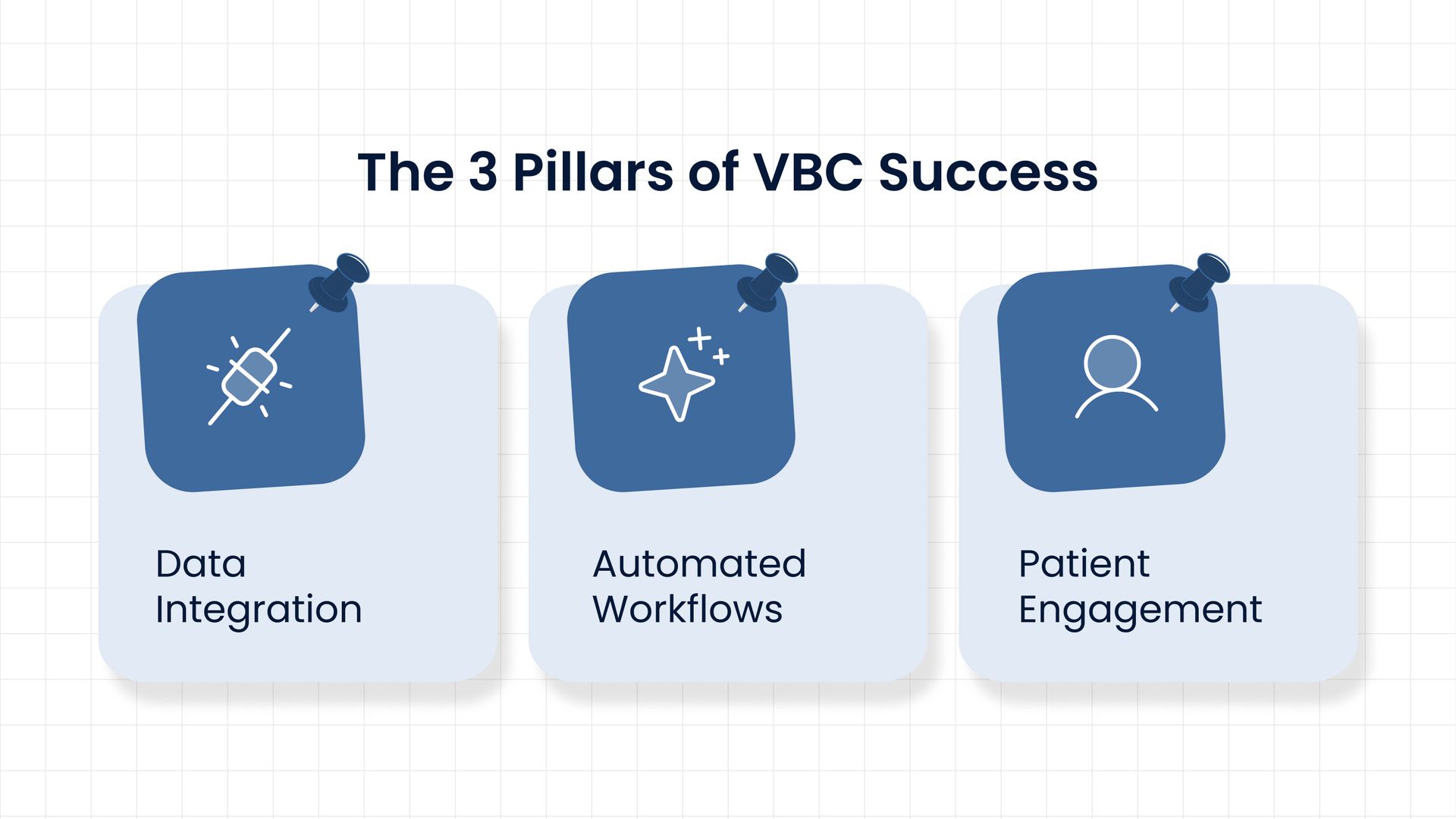
The "secret sauce" to a successful transition is integration. When your systems talk to each other, the complexity begins to fade. Integrated healthcare technology enables your organization to combine administrative, clinical, and financial data into a single streamlined workflow.
Optimization Through Automation
An integrated system removes the "human error" variable from repetitive tasks. By using standardized templates and AI-driven alerts, your team stays informed of real-time changes in patient status. This reduces the manual "detective work" that usually eats up an administrator's afternoon.
Data-Driven Decision Making
To succeed, you need to see the big picture. By centralizing information from billing platforms, EHRs, and patient portals, leaders can identify high-risk patterns before they become costly complications. This is where high-quality population health management tools become indispensable, allowing for evidence-based interventions that actually move the needle on quality metrics.
Elevating the Patient Journey
Value-based care is, at its heart, patient-centered. Effective care coordination software ensures consistent communication across every touchpoint. Whether it’s through secure messaging or self-service scheduling, patients who feel connected to their care journey are more likely to follow treatment plans, leading to better long-term health.
The QuickCap Advantage
Medvision’s
QuickCap 7 is designed specifically to handle the heavy lifting of modern healthcare administration. It isn't just a tool; it’s an all-in-one ecosystem that empowers stakeholders to optimize their workflows without the usual technical headaches.
- Proactive Population Health:
Use centralized dashboards to stratify risk and allocate resources where they are needed most. - Streamlined Referrals:
Automated inbound and outbound referral tracking ensures that patients don't "leak" out of your network, keeping the continuum of care intact. - Real-Time Analytics:
Access meaningful metrics on utilization and cost through intuitive dashboards. This level of transparency is essential for anyone using advanced healthcare analytics to drive strategy. - Clean Claims Processing:
By integrating payer-specific rules directly into the platform, QuickCap minimizes errors and accelerates the revenue cycle, ensuring you are rewarded for the quality of care provided.
Final Thoughts
The road to value-based care is paved with data. While the challenges of risk and interoperability are real, they are not insurmountable. With the right value-based care platform, your organization can transform these hurdles into a competitive advantage, achieving the dual goal of operational excellence and improved patient lives.
Ready to see how we can simplify your administrative legacy? You can check out our latest deep dives on the Medvision website to see our technology in action..
Optimize Your VBC Workflow
FAQs
How does a value-based care platform differ from a standard EHR?
While an EHR focuses primarily on clinical documentation, a value-based care platform integrates that clinical data with financial and administrative data. This allows organizations to manage risk-sharing agreements and track performance against quality metrics.
Why is interoperability in healthcare so critical for VBC?
In value-based models, providers are often responsible for a patient's care across multiple settings. Interoperability in healthcare ensures that data flows seamlessly among hospitals, specialists, and primary care providers, preventing care gaps and redundant testing.
Can population health management tools really lower costs?
Yes. By using population health management tools to identify high-risk patients early, providers can intervene before a condition requires expensive emergency room visits or hospitalizations. This shift to preventive care is the cornerstone of lowering the total cost of care.
What should I look for in healthcare risk management software?
The best systems offer real-time analytics and predictive modeling. This helps you understand your exposure in VBC reimbursement models and ensures your organization remains financially stable while pursuing clinical goals.
Recently published articles


Keep in touch
Subscribe to get the latest update
Trending topics


Share your insights on social media
Upcoming events and company news